Archive for September, 2026

Exploring Flavour Biases – what’s your wine type?

Thursday, September 24th, 2026

When one person loves a wine and another hates it, who is right? Is Marmite heavenly or the finest work of Beelzebub?
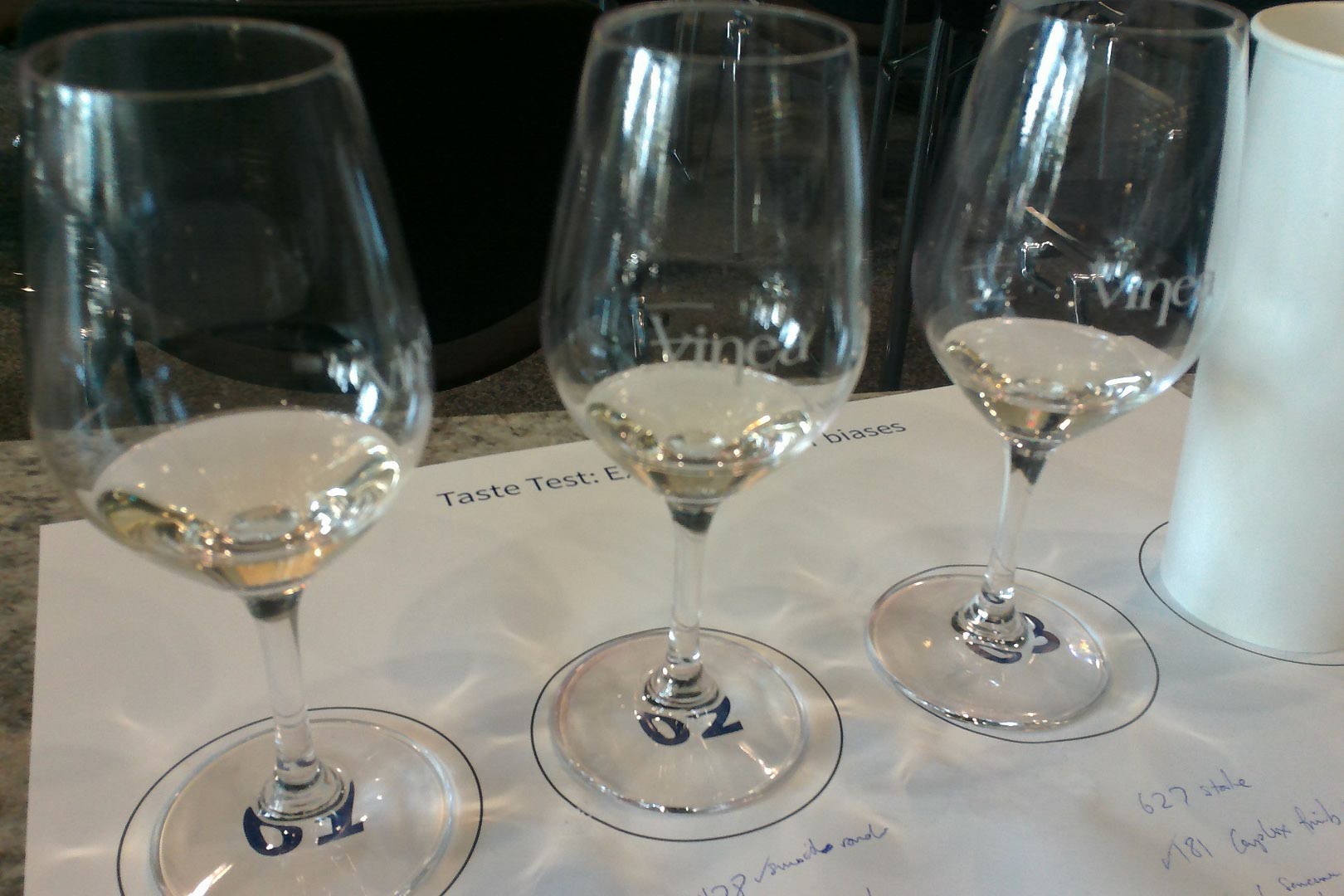
ALASTAIR - WIN_20141031_115453

According to Robert Joseph and Tim Hanni, that depends on your taste. Hanni has developed a vinotype classification that suggests than different people will like different wines based on their unique, personal combination of sensitivities and values.

A DWCC14 workshop presented attendees with 4 separate flights of wines, tasted blind, with tasters simply asked to choose a number of adjectives from a list and then choose their preferred wine from each flight. The wines in each flight were all similar and comprised still, dry white and red wines.

I tested as “sensitive” on the Vinotype scale, the other three options being Sweet, Hypersensitive, and Tolerant. Basically I am Mr Average, down the middle of the line.

Not surprisingly, there were a few games being played. Flight one contained two glasses of exactly the same wine but the second having had about twice the oxygen in the bottle. I preferred the latter, it felt much smoother and rounder to me,  and I didn’t spot the wines were identical. About 70% preferred the first wine. Each to their own!

Flight two experimented with sugar levels, most of the room disliking sample 3, the extra residual sugar affects ones interpretation of the other flavours. As the sugar levels rose, I found this doctored red Bordeaux got mustier and staler.

Flight three tested exposure to Brettanomyces – I am one of those that doesn’t mind a bit of Brett.

The final flight injected TCA into a dry white Bordeaux. I left the wines of this flight in the glass and tried them again at the end – wine three was rank. Psychology, knowledge after the event, or the effect of another 30 minutes of air? Who knows.

We are left looking for a conclusion and it inevitably leads towards Tim Hanni’s thesis that wine is an intensely individual affair and you should probably ignore all the techno-babble and drink wines that you like.

Wine writing ethics – stop me yawning please

Thursday, September 24th, 2026

Are you sick of people who write about wine, especially on the internet, harping on about ethics? The last thing I really want to do is add to, or inflame, the debate still further. But I was on a panel at the DWCC in October 2013 talking about public relations, and this got me thinking about my position in respect of wine. What really matters?

Firstly, samples. One of the key fundamentals of business since Adam Smith was in shorts, is that you need to get people to try your product before they will trust and buy. This means incentives. Maybe samples to journalists/writers, maybe free product directly to your customers. So, bloggers who put a “disclaimer” on their reviews, please get over yourselves. Everyone expects you to receive samples, everyone expects you to deal with this and express your opinion honestly for good or for bad.

Secondly, bribes. In my country (the UK) there is a law about this. You can go to prison for bribing people to do business with you. This includes implicit promises that are delivered after the sale. For example, you sign a $1m deal and then take your customer on a $100,000 excursion. Clearly disproportionate. You take them out for a $200 meal to celebrate. Fine. So, proportionality is the issue.

What is proportionate for a bottle of wine? I think a sample is just fine – even a bottle, if that is for review by a journo who is going to spread the information widely, or a potentially loyal customer who will buy many cases from you in the future. I think an invite to the Opera to enjoy dinner and sample your latest release is bribery. A vertical tasting, with lunch, at a winery is an enthusiast welcoming a guest. Having the winery pay your travel and accommodation fees is bribery.

I can already hear the poor journos weeping. How do we make money out of writing these days? This is an interesting point but, nothing to do with the wine industry. I have a cousin who writes for the Financial Times who faces exactly the same issue. Her vision of the future of journalism is grim and she doesn’t expect the industry to survive her career. I try to talk her up by offering suggestions from the modern music industry, for example, where bands pretty much issue their music on a digital platform for nothing  and cream the money in by charging fans $200 a pop to come to their concerts. It is hard to replicate a live experience on the internet. There is nothing like being there. Turns out my cousin is making about half her income these days from speaking at conferences and moderating panels. So, maybe there is some hope.

All I know is that when truly independent, quality, journalism disappears, I won’t be the only one who is sorry. I don’t want all my information to come from bloggers like me, with uncertain agenda and limited access to knowledge. I might enjoy reading their stuff but I trust the Financial Times because it has been doing it since 1884 and has proven its ethical standards time and again. And I am more than happy to pay for that.